

What’s the Difference Between Omega-3 and Fish Oil?
- EPA (Eicosapentaenoic acid) – directly supports cardiovascular health and inflammation reduction
- DHA (docosahexaenoic acid) – vital for brain function, eye health, and fetal neurological development
- ALA (Alpha-linolenic acid) – a plant-based precursor found in flaxseed, chia seeds, and walnuts
Triglyceride Form vs. Ethyl Ester: Why Molecular Structure Matters
Are Omega-3 and Fish Oil the Same Thing?
What About ALA – Does It Count as Omega-3?
Should You Take Fish Oil and Omega-3 Together?
What Food Is Highest in Omega-3?
- Atlantic mackerel – among the highest at approximately 4,580mg per 100 g serving
- Wild-caught Atlantic salmon – around 2,260mg per 100 g; wild varieties outperform farmed
- Sardines – approximately 1,480mg per 100 g, and among the most sustainable options
- Herring – a significantly underrated source in Western diets
- Oysters – a surprising but legitimate source at roughly 435 mg per 100g
Which Is Better for Skin Omega-3 or Fish Oil?
 Both omega-3 supplements and fish oil can meaningfully improve skin health; the key variable is EPA content and product freshness. The anti-inflammatory properties of EPA and DHA are central to skin benefits: these fatty acids help regulate oil production, strengthen the skin barrier, reduce redness, and support conditions like acne, eczema, and psoriasis.
Fish Oil vs. Algae Omega-3 for Skin: Which Wins?
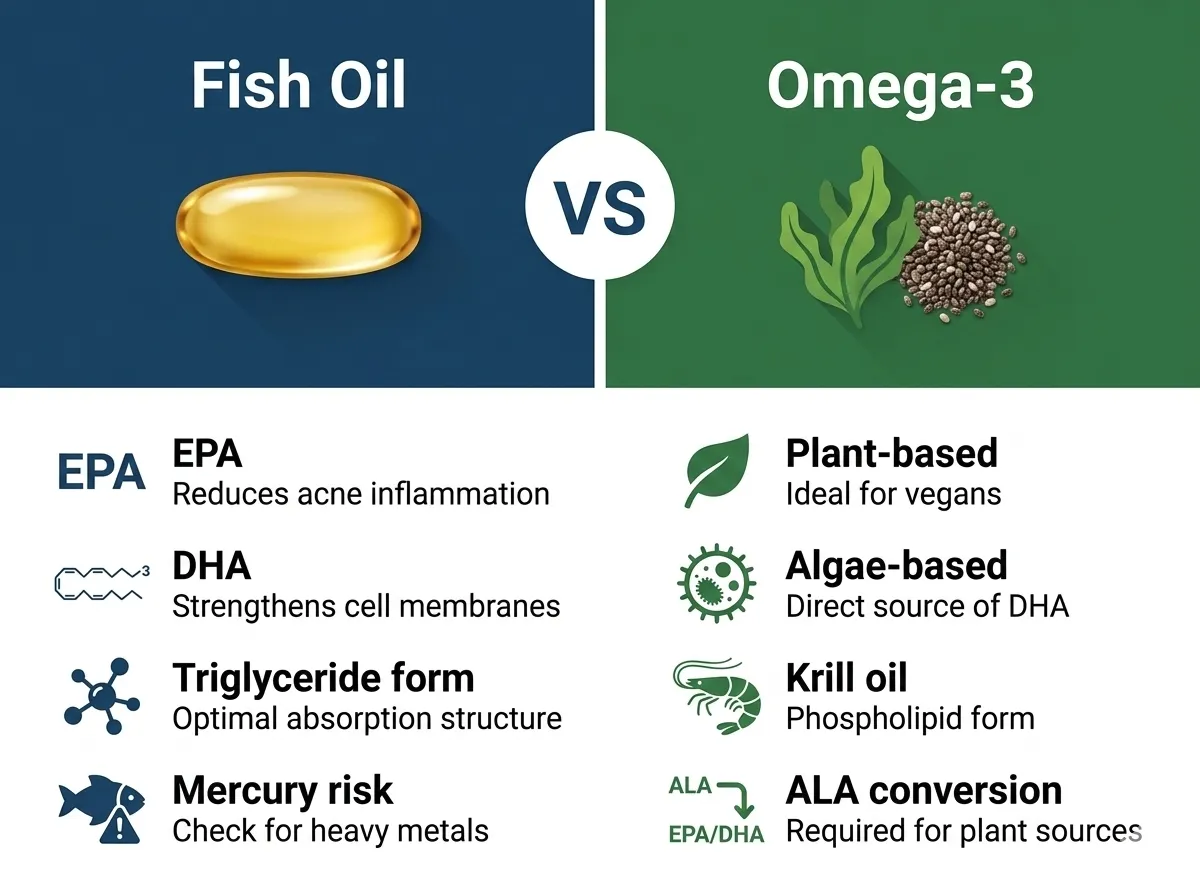
Omega-3 vs. Fish Oil: Head-to-Head Comparison
| Factor | Fish Oil | Omega-3 (Broad Category) |
| Source | Fatty fish (sardines, anchovies, mackerel) | Fish, krill, algae, flaxseed |
| Key Nutrients | EPA and DHA | EPA, DHA, ALA (varies by source) |
| Bioavailability | Moderate depends on the triglyceride/ethyl ester form | Triglyceride form is the highest |
| Plant-Based Option | No | Yes, algae-based supplements |
| Mercury Risk | Possible without molecular distillation | Lower with purity-tested brands |
| Best For | General supplementation | Targeted health goals |
| Oxidation Concern | Higher if poorly stored | Depends on form and quality |
| Skin Benefit | Strong EPA content helps reduce inflammation | Algae-based is also effective with the EPA |
Pros and Cons: Fish Oil
- Pro: Widely available, affordable, and extensively studied
- Pro: High EPA and DHA concentrations in quality products
- Pro: Strong clinical evidence supporting heart health benefits and triglyceride reduction.
- Con: Mercury contamination risk without molecular distillation verification
- Con: Fishy aftertaste and burping in lower-quality formulations
- Con: Sustainability concerns tied to industrial fishing practices
Pros and Cons: Algae-Based Omega-3
- Pro: Plant-based and vegan-friendly, suitable for all dietary preferences
- Pro: Delivers EPA and DHA directly, without relying on the fish intermediary.
- Pro: Generally lower mercury contamination risk
- Con: Higher cost per serving compared to standard fish oil capsules
- Con: Lower EPA concentration in many mainstream algae products. Read labels carefully
- Con: Taste and texture vary significantly by brand.
Common Question: People also ask
Is it OK to take omega-3 every day?
Yes. Daily omega-3 supplementation is considered safe for most healthy adults. Consistent intake supports cardiovascular health, helps manage inflammation, and contributes to long-term brain function. Standard daily doses between 250 mg and 1,000mg of combined EPA and DHA are well-tolerated. Those on blood thinners or planning surgery should consult a physician, as higher doses can amplify blood-thinning effects.
How to check if you need omega-3?
The most accurate method is an Omega-3 Index blood test measuring EPA and DHA concentration in red blood cell membranes. An index below 4% is considered high risk; 8–12% is optimal for cardiovascular health. Common signs of low levels include dry skin, poor concentration, fatigue, dry eyes, and joint stiffness. A healthcare provider can order the test and interpret results in full context.
In which fruit is omega-3 present?
Most fruits contain negligible omega-3. Avocado carries small amounts of ALA; berries like blackberries contain trace quantities. For meaningful plant-based omega-3s, focus on chia seeds, ground flaxseed, hemp seeds, and walnuts. These are the most concentrated non-animal ALA sources available.
Does omega-3 cause sleepiness?
Omega-3 is not a known cause of sleepiness. Some users report a mild calming effect related to its support of brain function and neurotransmitter activity. If drowsiness occurs after starting supplementation, consider whether the formula contains additional ingredients, and try taking fish oil capsules with a full meal rather than on an empty stomach.
How can I increase my omega-3 levels fast?
Combine dietary changes with quality supplementation. Add two to three weekly servings of fatty fish to your diet. Simultaneously, begin a supplement providing 1,000mg or more of combined EPA and DHA per day. Choose a product in triglyceride form for superior absorption and confirm it has passed independent purity testing for mercury. A follow-up Omega-3 Index test after 8-12 weeks will confirm measurable progress.
Related Articles & Internal Resources
Herbimint covers the full supplement comparison space. Explore these related guides:
- Best Fish Oil Supplements for Beginners: How to Compare Supplement Brands and Spot Quality Markers
- Krill Oil vs Fish Oil: Which Delivers Better Bioavailability and Absorption?
- Plant-Based Omega-3 Complete Guide: Algae Supplements Explained
- How to Read a Supplement Label: Dosage, Purity Testing, and What to Ignore
- Top Foods High in EPA and DHA: A Complete Dietary Guide for Beginners

1 Comment
Best Fish Oil Supplements for Beginners (2026 Guide)
March 12, 2026[…] with fatty liver will benefit most from omega-3 supplements when they also eat less processed carbs and sugars. Fish oil is a powerful tool in this context, […]