

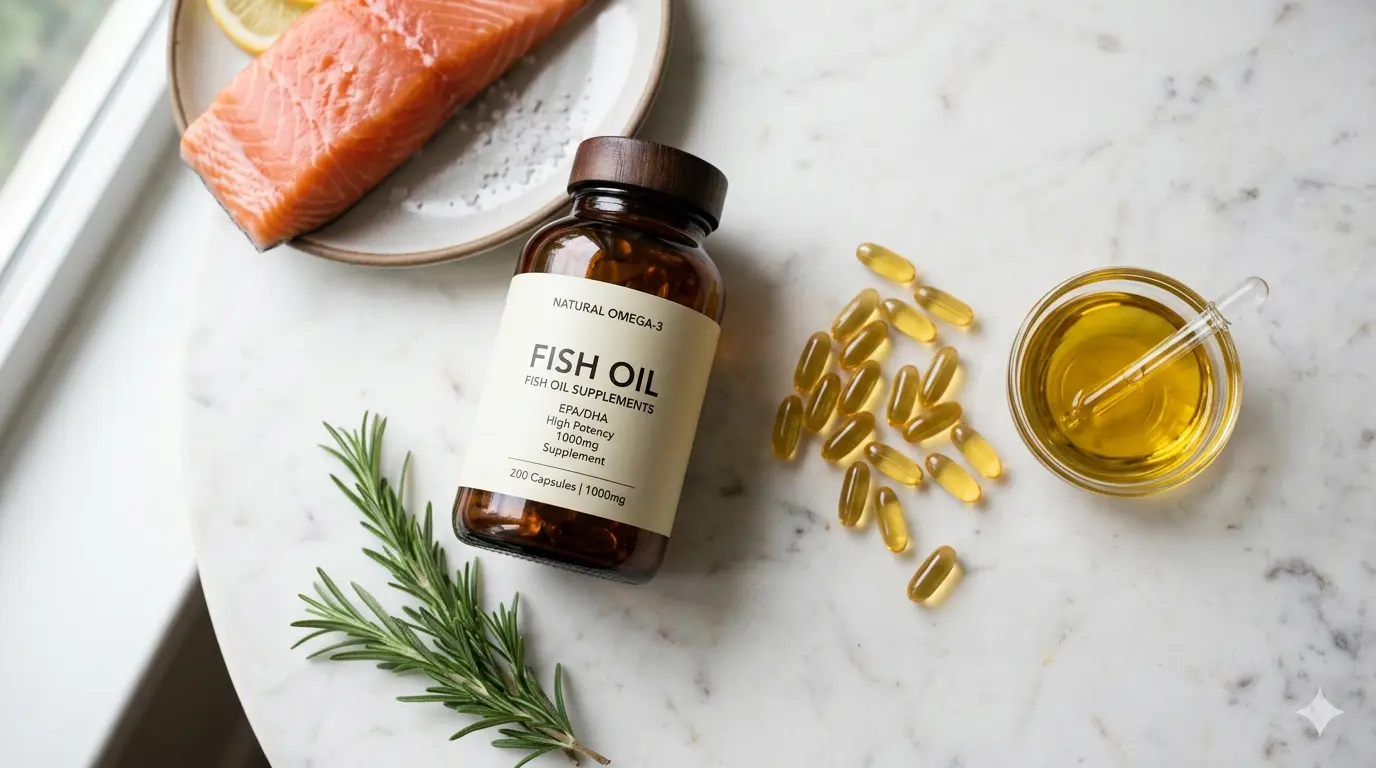
What Is Fish Oil and Why Does It Help With Inflammation
 Understanding Omega-3 Fatty Acids
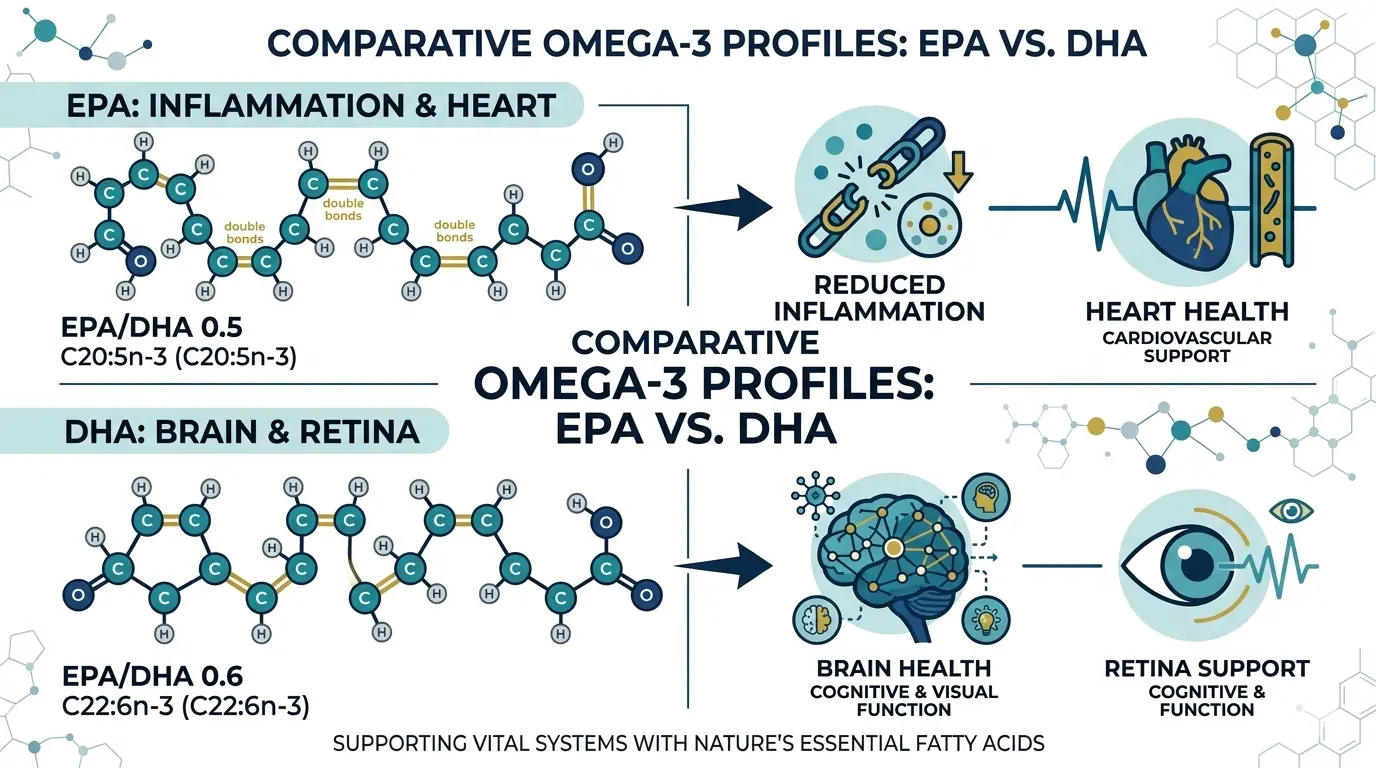
EPA vs DHA: Which Is Better for Inflammation
How Omega-3 Fatty Acids Reduce Inflammatory Responses
Recommended Fish Oil Dosage for Inflammation
General Daily Dosage Guidelines
Clinical Dosages Used in Research
Safe Upper Intake Limits
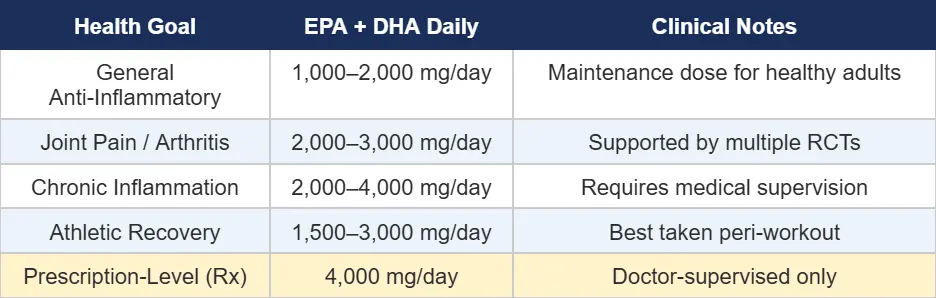
Fish Oil Dosage Based on Health Conditions

Fish Oil for Joint Pain and Arthritis
Fish Oil for Chronic Inflammation
It is worth noting that fish oil alone is rarely sufficient to address chronic inflammation. It works best when included in a healthy lifestyle with an anti-inflammatory diet, regular physical activity, and needed medical treatment.
Important Note: Fish oil is a complementary intervention, not a replacement for prescribed medications in diagnosed inflammatory conditions. Always work with a healthcare provider to determine how supplementation fits into your treatment plan.
Fish Oil for Muscle Recovery and Exercise Inflammation
Research shows that 1,500 to 3,000 mg of EPA + DHA taken daily can alleviate exercise-induced muscle soreness, reduce inflammatory markers like CRP and IL-6, and assist in quicker recovery between training sessions. Timing the dose around workouts, particularly in the hours surrounding exercise, may enhance these benefits.
How to Calculate the Right Fish Oil Dose
Understanding Supplement Labels
Misreading supplement labels is the single most common reason people underdose on fish oil. The label must list EPA and DHA separately in the supplement facts panel. These two numbers, not the total fish oil or total omega-3 figures, determine the therapeutic value of the product.
Here is what to look for on the label, in order of importance:
✔ Serving size: How many capsules constitute one serving?
✔ Total EPA per serving: In milligrams, the primary anti-inflammatory compound.
✔ Total DHA per serving: In milligrams, the structural and pro-resolving compound.
✔ Combined EPA + DHA: The therapeutic dose number. This is what you compare against dosage guidelines.
✔ Total fish oil per serving: Largely irrelevant for dosage purposes; ignore this number when calculating your intake.
▸ EPA and DHA Content vs Total Fish Oil
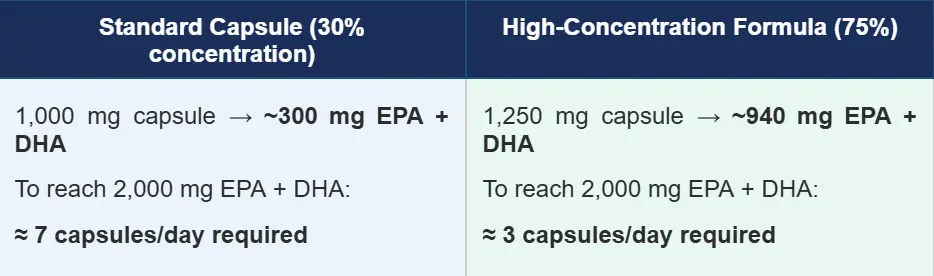
Standard fish oil products contain approximately 30% omega-3 by weight. Premium or pharmaceutical-grade formulations may contain 60–90% omega-3, offering more EPA + DHA per capsule.
Triglyceride (TG) form of fish oil is absorbed 20–30% more efficiently than ethyl ester (EE) form, which is how most concentrated fish oils are processed. This bioavailability difference means that TG-form products deliver more functional EPA + DHA per milligram consumed, even if the label numbers appear similar.
▸ Example Dosage Calculations
Two real-world scenarios illustrate how label literacy changes your dosage strategy:
How Long Does Fish Oil Take to Reduce Inflammation
Short-Term Effects
Fish oil does not work overnight. In the short term, typically within 2 to 4 weeks of consistent supplementation, some people notice a modest reduction in joint stiffness, particularly in the morning. Blood levels of omega-3 fatty acids begin to rise within days, but functional changes in inflammatory markers take longer to manifest.
Long-Term Anti-Inflammatory Benefits
The most clinically significant anti-inflammatory benefits are typically observed after 3 to 6 months of consistent supplementation at a therapeutic dose. Research shows that long-term daily omega-3 consumption leads to measurable reductions in CRP, TNF-alpha, and other inflammatory biomarkers. Long-term use also contributes to sustained cardiovascular benefits, including improved triglyceride levels and blood pressure in at-risk populations.
Factors That Influence Results
Several variables influence how quickly and effectively fish oil reduces inflammation:
- Dose and EPA/DHA concentration of the supplement
- Baseline omega-3 index (your existing EPA + DHA levels in red blood cells)
- The overall dietary pattern of a high omega-6 diet (processed foods, refined vegetable oils) can counteract the omega-3 benefits.
- Severity and type of the underlying inflammatory condition
- Consistency and timing of supplementation
- Absorption from the triglyceride form offers higher bioavailability than the ethyl ester.
Best Time to Take Fish Oil for Maximum Benefits
Taking Fish Oil With Meals vs Empty Stomach
Fish oil absorption is significantly improved when taken with a fat-containing meal. Omega-3 fatty acids are fat-soluble, meaning they require dietary fat to be properly absorbed in the small intestine. Taking fish oil on an empty stomach not only reduces absorption but also increases the likelihood of gastrointestinal side effects such as nausea and fishy aftertaste.
Morning vs Night
There is no definitive clinical evidence that morning or evening supplementation produces meaningfully different anti-inflammatory outcomes. That said, taking fish oil with your largest meal of the day tends to optimise absorption regardless of timing. Some individuals prefer evening doses, as it may reduce the fishy aftertaste that can linger during the day.
Splitting the Daily Dosage
For higher therapeutic doses (2,000 mg EPA + DHA or more per day), splitting the dose across two or three meals is a practical strategy. This approach can reduce gastrointestinal discomfort, maintain steadier omega-3 blood levels throughout the day, and improve overall tolerability, especially for those new to higher-dose supplementation.
Potential Side Effects and Safety Considerations

Common Side Effects
Fish oil is well-tolerated by most people at recommended doses. The most commonly reported side effects are mild and gastrointestinal in nature:
- Fishy breath or aftertaste can be reduced by taking with meals or choosing enteric-coated capsules
- Nausea or stomach discomfort usually resolves by taking it with food
- Loose stools or diarrhoea are more common at higher doses
- Belching or reflux can be mitigated by refrigerating capsules or choosing odour-controlled formulas
Who Should Avoid High Fish Oil Doses
Certain individuals should exercise particular caution with fish oil supplementation and consult a healthcare professional before starting:
- People with fish or shellfish allergies
- Those scheduled for surgery (due to blood-thinning effects, typically advised to stop 1–2 weeks pre-surgery)
- Individuals with bleeding disorders
- Those with poorly controlled type 2 diabetes (high-dose fish oil may affect blood glucose in some individuals)
- Pregnant women should consult a doctor, as DHA is beneficial, but dose management is important
Possible Drug Interactions (Blood Thinners)
The most clinically significant drug interaction involves anticoagulant medications such as warfarin, aspirin, or newer blood thinners like apixaban. High-dose fish oil (above 3,000 mg EPA + DHA per day) can potentiate the blood-thinning effects of these drugs, increasing the risk of excessive bleeding.
Anyone taking blood thinners should discuss fish oil supplementation with their physician before starting. Regular monitoring of clotting time (INR) may be recommended for those on warfarin.
Natural Food Sources of Omega-3
Fatty Fish Rich in Omega-3
Whole food sources of EPA and DHA are always preferable to supplementation when accessible. These fatty fish are among the richest sources:
- Salmon: One of the highest natural sources of EPA + DHA, providing 1,500–2,500 mg per 100g serving depending on variety (Atlantic salmon being the highest).
- Sardines: An affordable and sustainable option, delivering around 1,400–2,000 mg of EPA + DHA per 100g serving.
- Mackerel: Rich in omega-3s and vitamin D, providing approximately 2,000–2,500 mg per 100g, one of the most nutrient-dense options.
- Tuna: Albacore tuna is a good source at roughly 700–900 mg per 100g, though it contains higher mercury levels than smaller fish, warranting moderation.
Plant-Based Omega-3 Sources
Plant-based sources provide ALA, which must be converted to EPA and DHA, a conversion the body does with limited efficiency. However, these sources remain valuable, particularly for those following plant-based diets:
- Flaxseeds: Among the richest plant sources of ALA; best consumed ground for better absorption.
- Chia seeds: Provide a good balance of ALA along with fibre and minerals.
- Walnuts: A convenient whole-food source of ALA, also providing antioxidants and polyphenols.
- Algae oil: The only plant-based source of preformed EPA and DHA. Derived from the same microalgae that fish consume, algae oil offers bioavailable omega-3s without the fish, making it ideal for vegetarians and vegans seeking direct EPA/DHA supplementation.
How to Choose a High-Quality Fish Oil Supplement What to Look for in a Good Fish Oil Supplement
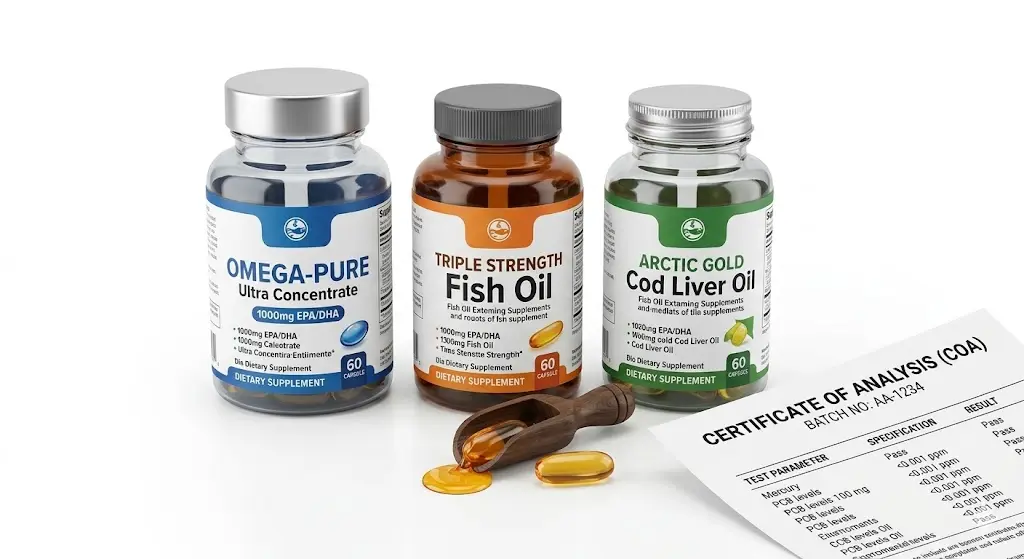
With thousands of fish oil products on the market, quality varies enormously. When evaluating a supplement, look for:
- Clear disclosure of EPA and DHA content per serving (not just total omega-3 or total fish oil)
- IFOS (International Fish Oil Standards) certification or similar third-party quality verification
- Enteric coating if you are sensitive to digestive side effects
- Short ingredient list with no unnecessary additives or artificial preservatives
- Country of origin and sourcing transparency
EPA and DHA Ratio
For inflammation-focused supplementation, prioritise products with a higher EPA ratio relative to DHA, ideally 2:1 or higher. While DHA supports overall omega-3 health, EPA is the more potent anti-inflammatory compound. Some formulations offer concentrated EPA-only products, which are used in clinical settings for specific inflammatory and mood-related conditions.
Purity, Freshness, and Third-Party Testing
Freshness is a critical but often overlooked quality indicator. Oxidised (rancid) fish oil not only smells unpleasant but may actually produce pro-inflammatory byproducts, counteracting the intended benefit. To assess freshness, break open a capsule: fresh fish oil should have a mild, clean ocean scent, not a strong or rancid fish smell.
Always choose products that have undergone third-party testing for heavy metals (mercury, lead, cadmium), PCBs, dioxins, and oxidation markers (TOTOX value). Reputable brands publish their certificates of analysis (COAs) on request or directly on their website. This is the single most important quality differentiator when choosing a supplement.
Pro Tip: Store fish oil capsules in the refrigerator after opening. Cold temperatures slow oxidation and preserve the EPA + DHA content, extending the product’s effective shelf life significantly.
Frequently Asked Questions
Is 1000 mg of fish oil enough for inflammation?
It depends on the EPA + DHA content of that 1,000 mg capsule. If the capsule contains only 300 mg of combined EPA + DHA, typical for standard formulations, then 1,000 mg total fish oil is not sufficient for meaningful anti-inflammatory effects. You would need 2,000–3,000 mg of EPA + DHA daily, which may require 7–10 standard capsules. Opting for high-concentration formulas makes reaching therapeutic doses far more practical.
How long does fish oil take to reduce inflammation?
Most people begin to notice subjective improvements such as reduced joint stiffness within 2 to 4 weeks of consistent supplementation. However, clinically measurable reductions in inflammatory biomarkers like CRP and IL-6 are typically observed after 3 to 6 months of daily use at a therapeutic dose. Patience and consistency are essential for meaningful, lasting results.
Can you take too much fish oil?
Yes. While fish oil is safe at recommended doses, excessive intake, particularly above 5,000 mg of EPA + DHA per day, increases the risk of bleeding, immune suppression, and potential negative effects on LDL particle size. The EFSA considers up to 5,000 mg per day safe for healthy adults, but most people do not need to approach this upper limit. Always consult a healthcare provider before exceeding 3,000 mg EPA + DHA per day.
Final Thoughts
Fish oil remains one of the most evidence-backed supplements for managing inflammation, with decades of research supporting its role in reducing inflammatory markers, relieving joint pain, and supporting cardiovascular health. The key is not just taking fish oil; it is taking the right dose, in the right form, consistently.
For most adults seeking general inflammation support, 1,000 to 2,000 mg of combined EPA + DHA per day is a solid starting point. For those managing specific inflammatory conditions like rheumatoid arthritis or chronic inflammation, 2,000 to 3,000 mg per day, confirmed through label reading and not total fish oil milligrams, is more appropriate. Therapeutic doses above 3,000 mg per day should always be pursued with medical guidance.
Prioritising supplement quality, choosing triglyceride-form fish oil with third-party testing, and taking your dose with meals will maximise the benefit you get from every capsule. And if you are managing a specific health condition, always loop in a qualified healthcare professional for personalised dosage recommendations tailored to your needs.

1 Comment
Omega-3 Deficiency: 10 Warning Signs Your Body Is Trying to Tell You
March 18, 2026[…] worsening symptoms of arthritis. Supplementation with fish oil has been shown to meaningfully reduce inflammation in joints over […]