

Which Protein Is Best for Muscle Gain for Beginners?
The most recommended protein type for muscle gain beginners is whey protein concentrate (WPC). It is produced from milk during cheese-making, is readily available in India, is affordable, and includes all nine essential amino acids essential for the body.
According to industry nutrition research, whey protein is absorbed rapidly after a workout, making it ideal for post-training recovery. For Indian beginners, understanding that traditional meals are usually heavy in carbohydrates is crucial, as they may not fulfill the recommended protein intake of 1.6 to 2.2 grams per kilogram of body weight for muscle growth.
Here is a quick breakdown of the main types suitable for beginners:
Whey Protein Concentrate (WPC 80): Contains roughly 70-80% protein per serving, and includes some lactose and fat. It is the most budget-friendly option and works well for most beginners who are not lactose intolerant. Brands like MuscleBlaze Biozyme, Optimum Nutrition Gold Standard, and AS-IT-IS Nutrition are popular in this category in India.
Whey Protein Isolate (WPI): Contains 90%+ protein, very low lactose, minimal fat. Better for those with mild lactose sensitivity or those aiming for a leaner physique. Slightly more expensive than concentrate.
Plant-Based Protein (Pea + Rice Blend): Ideal for vegetarians and vegans, who are a significant demographic in India. A pea-rice blend provides a complete amino acid profile close to whey. Brands like Oziva and Ritual are gaining traction in this segment.
Casein Protein: Slow-digesting, best taken before bed to support overnight muscle repair. Not a typical first choice for beginners, but worth knowing about as you advance.
For most Indian beginners, starting with a quality whey concentrate priced at ₹2,000-₹3,500 for a 1 kg pack is the most practical and effective starting point.
What Protein Powder Is Easiest for Beginners to Digest?
Digestibility is one of the most underrated factors beginners overlook. A protein powder that causes bloating or gas can undermine your consistency, and consistency is key to fitness success.
Whey protein isolate is generally considered the easiest to digest among dairy-based proteins due to its very low lactose content. If you have experienced discomfort with milk or paneer in large quantities, Isolate is worth the slightly higher price.
For those who prefer completely dairy-free options, pea protein is the most gut-friendly plant-based choice. It is naturally hypoallergenic and sits well with most digestive systems.
Key factors that improve digestibility:
Digestive enzymes in the formula: Inclusion of advanced enzyme complexes: Several contemporary Indian protein supplements incorporate blends such as Digezyme or Aminogen. These effectively accelerate the breakdown of protein chains and substantially alleviate bloating.
Lower serving size at the start: Beginners should start with half a scoop for the first week to help their gut adjust instead of jumping to a full 30g serving.
Timing: Taking protein powder with or after meals helps most people avoid digestive discomfort.
Lactase enzyme additions: Some brands add lactase to help people with lactose sensitivity while using whey concentrate as the base.
The practical advice here: choose a protein that includes digestive enzymes, start low, and track how your body responds over two weeks before concluding.
How to Choose Between Supplement Brands as a Beginner
The Indian supplement market has matured significantly. Alongside global brands, several Indian manufacturers now produce genuinely high-quality products. Herbimint compares supplement brands by assessing protein content, ingredient quality, pricing, availability, and user trust.
When comparing brands, look for:
- Third-party lab testing confirms the protein content on the label matches what is in the tub.
- No proprietary blends; Experience the clarity of transparency with no proprietary blends; our labeling provides precise ingredient quantities.
- Mixability, a practical concern that affects daily compliance
- Taste and texture relevant for long-term use consistency
Industry guidelines suggest focusing on protein quality (amino acid profile and digestibility) over brand name or flavor.
Common Mistakes Beginners Make with Protein Powders
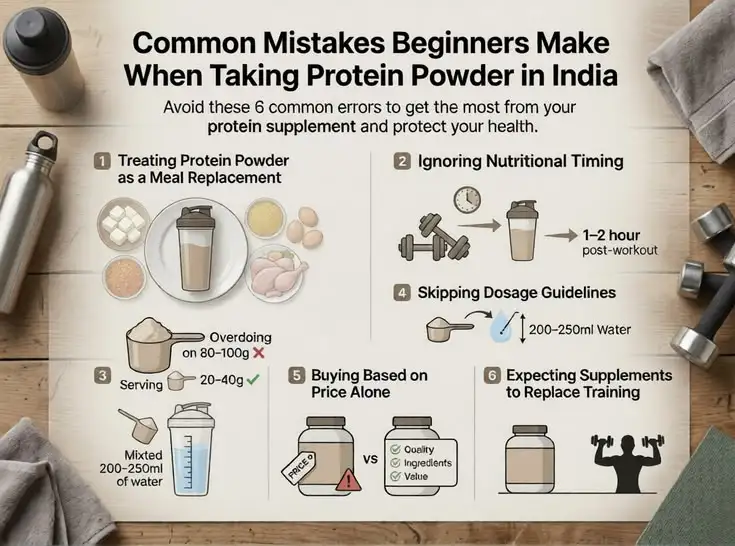
Understanding what not to do is just as valuable as knowing what to do. The following mistakes are seen repeatedly among first-time supplement users in India, and they cost both money and progress.
Mistake 1: Relying on protein powder as a meal replacement:
Protein powders are supplements; they supplement a diet, not replace it. Beginners who only consume shakes and avoid dal, eggs, paneer, or chicken miss out on important nutrients, fiber, and the feeling of fullness that whole foods offer. A shake works best as an addition to three balanced meals, not a substitute.
Mistake 2: Buying the cheapest unverified brand:
India’s supplement market has faced scrutiny for adulteration. Third-party tested and FSSAI-certified brands are strongly recommended. Cheap, unverified powders have been found to contain less protein than labeled, added sugar, or low-quality protein sources. Always check for lab certifications or third-party testing reports before purchasing.
Mistake 3: Overconsuming protein, thinking more is always better:
The body can only utilize a certain amount of protein per meal for muscle protein synthesis. Research generally points to 20-40 grams per serving being the effective range. Consuming 60-80 g of protein in a single shake won’t double benefits; it just increases calorie intake and puts stress on the kidneys long-term.
Mistake 4: Ignoring the importance of total daily protein from food:
A beginner weighing 65 kg needs approximately 104-130 grams of protein per day for muscle gain. If their diet already provides 70-80 grams through eggs, legumes, and dairy, they only need one scoop of protein powder, not two or three.
Mistake 5: Neglecting to match protein consumption with appropriate exercise routines:
Protein powder without a structured workout plan produces little to no visible muscle gain. Supplements support training; they do not replace it. This seems obvious, but it is frequently misunderstood by those who believe the supplement does the work.
Mistake 6: Neglecting hydration:
Higher protein intake demands higher water intake. Beginners who do not increase water consumption often experience constipation, kidney strain over time, and reduced efficiency in protein metabolism.
Pillar Page Content Section
This article is part of a broader content cluster on supplementation and muscle building. For deeper research, explore these related guides:
- Best Creatine and Protein Supplements 2026: An easy-to-understand guide on how creatine and protein work together for better strength in India.
- Best Whey Protein for Muscle Gain 2026:A focused analysis of India’s top whey proteins, comparing isolate and concentrate efficiency, pricing, and lab-testing transparency.
- How Can a Skinny Guy Gain Weight Fast?: A calorie-focused guide for skinny guys to gain weight quickly, featuring meal strategies, mass gainer advice, and training principles tailored for ectomorphs.
- Why Do Doctors Say No to Protein Powder?: Doctors caution against protein powder because of potential health risks, especially regarding kidney function. This analysis explores the myths of protein supplementation and when being careful is important.
Common Question: People also ask
Question: What is the 3-3-3 rule of eating?
Answer: The 3-3-3 rule advises eating 3 balanced meals daily, incorporating 3 macronutrients (proteins, carbs, fats) in each, and sticking to a meal schedule of every 3-4 hours. For muscle-building beginners, this structure helps ensure steady amino acid availability throughout the day, reducing muscle breakdown between training sessions.
Question: What is a good protein to start with?
Answer: Whey protein concentrate is generally recommended as the best starting protein for beginners in India. It offers a strong amino acid profile, solid digestibility, good absorption rate, and is available at budget-friendly price points. Vegetarians can start with pea protein or soy isolate as equally effective alternatives.
Question: Which foods grow muscle fast?
Answer: The best foods for muscle support are those high in complete protein and leucine, which help trigger muscle development. Top choices include eggs, paneer, chicken breast, Greek yogurt, lentils (dal), and fish. Pairing these with adequate carbohydrates and healthy fats ensures the full nutritional environment needed for lean muscle growth.
Question: Can a gym beginner take protein powder?
Answer: Yes, a gym beginner can safely take protein powder provided they are otherwise healthy and use it appropriately. Protein supplements are not steroids; they are a concentrated food source. Beginners should start with a single scoop daily, assess digestive tolerance, and increase gradually. Anyone with pre-existing kidney or liver conditions should consult a physician before starting any supplement.
Question: Are plant-based proteins effective for muscle gain?
Answer: Research shows that high-quality plant-based proteins, like pea protein and soy isolate, can promote muscle gain similarly to whey if consumed in adequate amounts. Combining multiple plant sources or adding BCAA supplements improves the amino acid completeness.
Question: What is the best time to take protein powder?
Answer: Post-workout nutrition is the most widely recommended timing within 30-90 minutes after training. For beginners, evenly spreading protein intake over 3-5 meals matters more than strict timing. Casein is best consumed before sleep for overnight muscle repair.
Question: How long before I see results from protein powder?
Answer: Visible lean muscle changes typically require 8-12 weeks of consistent training combined with adequate protein intake. Protein powder accelerates recovery and supports muscle protein synthesis, but does not produce overnight results. Patience and training consistency are the actual variables that determine outcomes.
1 Comment
Why Do Doctors Say No to Protein Powder? (Real Reasons)
March 1, 2026[…] who is asking. This guide unpacks the real medical concerns, identifies who should genuinely limit protein powder use, and helps beginners, especially those browsing platforms like Herbimint, make smarter, safer supplement decisions based […]