

Athlete Whey Protein: The Cornerstone of Sports Nutrition

Why Is Whey Protein Essential for Athletes?
Athlete whey protein provides all essential amino acids in one serving, unlike many plant-based proteins that may lack some. This makes it a top choice for serious athletes globally.
How Fast Absorption Gives Athletes the Edge
How to Use Athlete Whey Protein for Maximum Results
Better performance is the result of consistent training, proper nutrition, and smart recovery. Whey protein plays a direct role in all three.
Muscle Recovery and Repair
Supporting Lean Mass Gains
Athletes aiming for lean muscle rather than bulk will find that whey protein, especially in isolate form, supports this goal effectively.
It helps athletes gain lean muscle without adding extra fats or carbs, allowing them to manage their calories.
Endurance and Strength Training Benefits
Whey Protein as a Meal Replacement
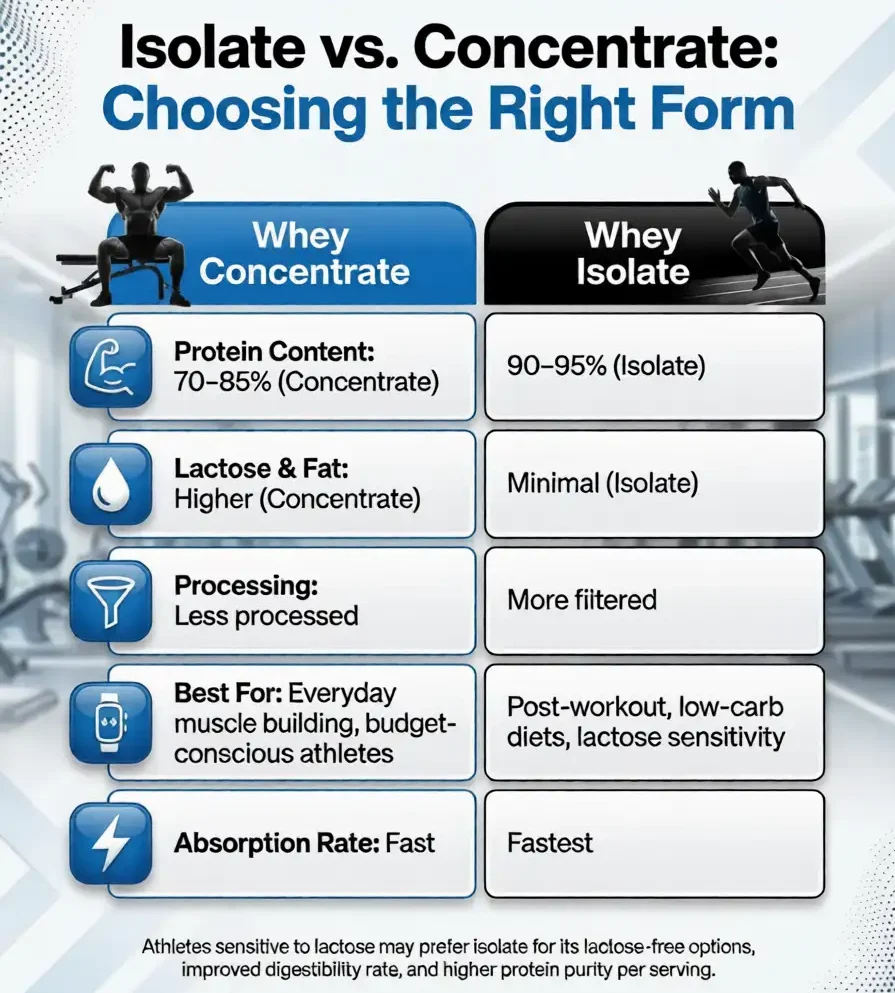
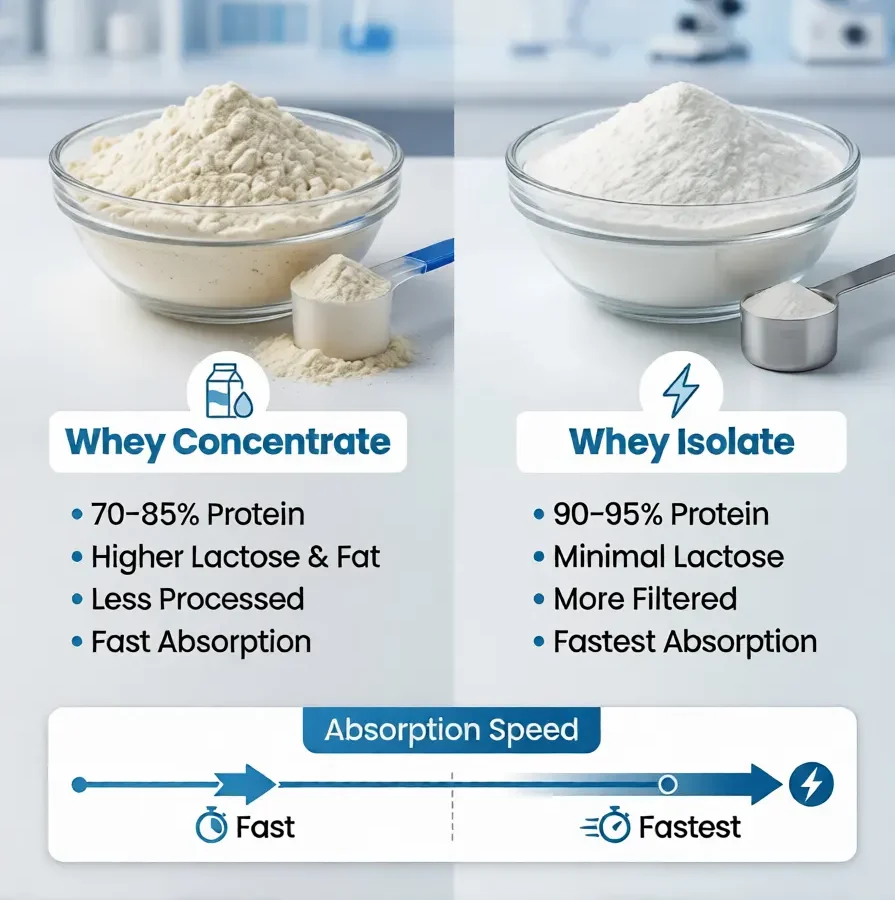
Isolate vs. Concentrate: Choosing the Right Form
| Feature | Whey Concentrate | Whey Isolate |
| Protein Content | 70-85% | 90-95% |
| Lactose & Fat | Higher | Minimal |
| Processing | Less processed | More filtered |
| Best ForEvery day | y muscle building, budget-conscious athletes | Post-workout, low-carb diets, and lactose sensitivity |
| Absorption Rate |
Fast |
Fastest |
Athletes sensitive to lactose may prefer isolate for its lactose-free options, improved digestibility rate, and higher protein purity per serving.
Dosage Timing and Post-Workout Nutrition Strategy
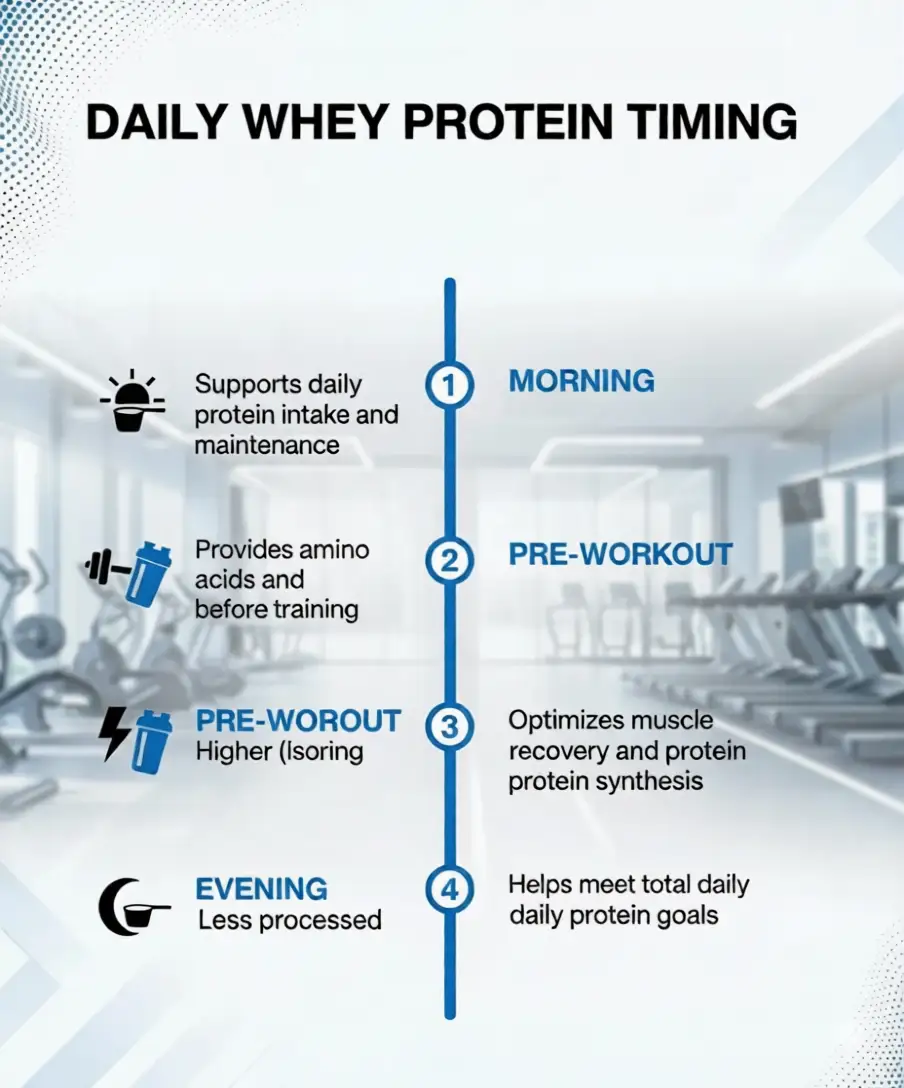
Many athletes often neglect the importance of dosage timing. While total daily protein intake matters most, strategic timing around training amplifies results:
- Pre-workout: A moderate serving 60-90 minutes before training primes muscles with available amino acids.
- Post-workout: 25-40 g within 30-45 minutes of finishing exercise maximises muscle repair and protein synthesis. Consuming whey post-exercise is the most consistently supported timing recommendation in sports science.
- Between meals: Athletes on a high-protein diet needing 1.6-2.2 g of protein per kg of body weight can use whey shakes to meet their goals without adding too many calories.
Building a Smart Supplementation Stack
Whey protein works even better as part of a structured supplementation stack:
- Creatine monohydrate: for strength and power output during high-intensity training
- BCAA supplements: for additional intra-workout amino acid support
- Casein protein: taken before sleep for slow-release overnight muscle repair
- Multivitamins and electrolytes: to support overall health and hydration during intense training cycles
Recommended Watch
How Whey Protein Works – A Science-Based Overview
What Science and Sports Nutrition Experts Say
Frequently Asked Questions (FAQ)
What are the benefits of whey protein for athletes?
Athlete whey protein delivers several key benefits:
- Muscle Repair: Provides the amino acids needed to rebuild tissue broken down during exercise.
- Muscle Growth: Stimulates protein synthesis, leading to lean mass gains over time.
- Faster Recovery: reduces soreness and helps athletes return to training sooner.
- Convenience: a quick, high-quality source of post-workout nutrition
- Body Composition: As part of a high-protein diet, it supports satiety and weight management.
Which whey protein is best for strength training?
For strength training, look for high-leucine whey isolates with minimal additives. Focus on products with third-party testing certifications like Informed Sport or NSF Certified for Sport to guarantee quality, purity, and compliance with athletic standards.
What are the top-rated whey proteins for muscle recovery?
Products that offer a high concentration of BCAAs, particularly leucine, are typically top-rated for recovery. Fast-absorbing isolates or hydrolysates are also highly regarded for their ability to kickstart muscle repair quickly. Discover top-rated whey protein choices for muscle gain at Herbimint.
What makes a top athlete whey protein isolate?
A top-tier isolate is defined by its purity (over 90% protein by weight), a rich BCAA content, and excellent solubility. It should deliver rapid post-workout nutrition without unnecessary fillers or additives, a reliable tool for serious athletic performance.
2 Comments
True Athlete: The Game-Changer in Plant Protein – whey protein for muscle gain
February 23, 2026[…] for True Athlete Plant Protein at […]
Best Creatine and Protein Supplements 2026 - Reviews & Guide
February 27, 2026[…] the only supplements with rock-solid science backing their effectiveness for muscle building and athletic performance. While other products come and go, these two have stood the test of time because they actually […]