

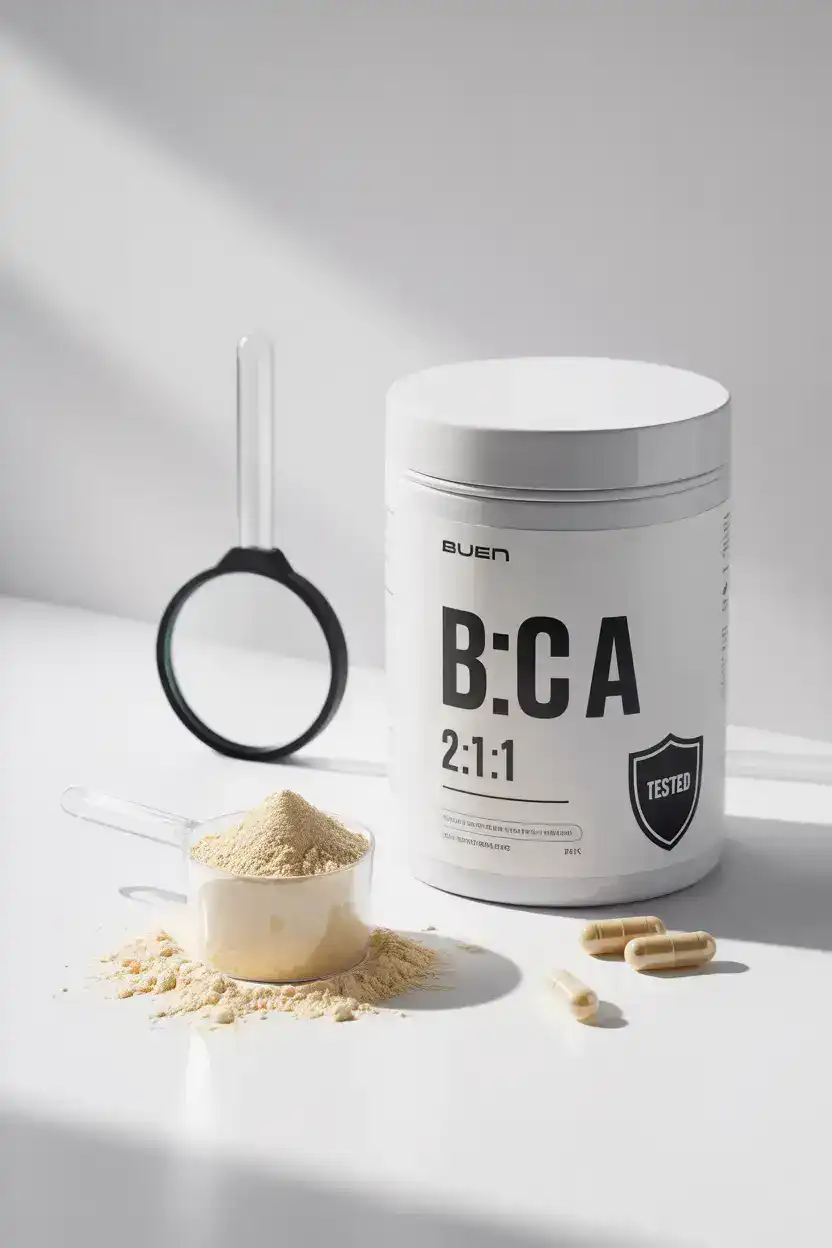
In sports nutrition, branched-chain amino acids are a hot topic when optimizing your training supplements. Athletes often rely on essential nutrients like leucine, isoleucine, and valine in pre-workout supplements to boost exercise performance and maintain muscle during intense workouts.
What Are BCAAs and Why Do They Matter?
Branched-chain amino acids, leucine, isoleucine, and valine, are three of the nine essential amino acids that your body cannot produce itself. During exercise, BCAAs provide unique benefits because they go straight to the muscles rather than being processed in the liver like other amino acids.
Here’s what makes each one special:
Leucine is your muscle-building powerhouse. It flips the switch on protein synthesis, essentially telling your muscles to start repairing and growing. Think of it as the foreman on a construction site; nothing gets built without its signal.
Isoleucine keeps your energy steady during tough workouts and helps regulate your blood sugar. When you’re grinding through that final set, this amino acid is working behind the scenes to keep you going.
Valine acts as your strength guardian, guarding against muscle breakdown when your workouts become demanding. It also steps in as an energy source when your body runs low on glycogen.
The Real Benefits of Taking BCAAs Pre-Workout
Taking BCAAs 30-45 minutes before training gives your muscles quick access to these important nutrients when exercise intensity is highest. This timing isn’t random – it’s strategic.
Key Benefits You’ll Actually Notice:
- Less muscle breakdown during training – Your body won’t need to cannibalize existing muscle for energy.
- Reduced soreness the next day – You’ll recover faster and feel better between sessions.
- Better endurance during long workouts – BCAAs can serve as backup fuel when glycogen runs low.
- Maintained strength throughout your session – Fatigue reduction means your last set can match your first
The science backs this up. When you’re training hard, your muscles face constant breakdown. BCAAs help protect your muscles by providing building blocks that minimize damage.
How BCAAs Support Your Training Goals
Muscle Recovery and Growth
After you finish a brutal leg day, your muscles don’t just magically repair themselves. They need raw materials: specifically, amino acids. BCAAs provide these materials in their most accessible form.
Leucine particularly shines here, activating the mTOR pathway in your cells. Without getting too technical, this pathway is like flipping the “build muscle” switch in your body. More leucine means stronger signals for muscle growth and better protein synthesis.
Energy When You Need It Most
While carbohydrates are your primary fuel source, BCAAs can pinch-hit during long or intense sessions. When glycogen runs low around minute 75 in endurance training, valine and isoleucine can be converted to glucose for an energy boost.
This dual role makes BCAAs particularly valuable for athletes doing high-volume resistance training or extended cardio sessions.
Fighting Mental and Physical Fatigue
Here’s something interesting: BCAAs might help you push harder by affecting your brain, not just your muscles. They compete with tryptophan (the stuff in turkey that makes you sleepy) for entry into your brain. Less tryptophan getting through means less serotonin production, which may delay that feeling of “I’m done” during tough workouts.
Getting Your Dosage and Timing Right
How Much Should You Take?
Most research supports 5-10 grams per serving, with a 2:1:1 ratio of leucine to isoleucine to valine. This ensures you get enough leucine to maximize protein synthesis while still benefiting from the other two amino acids.
When Should You Take It?
For pre-workout use, 30-45 minutes before training is ideal. This gives your body time to digest and absorb the amino acids so they’re available when you need them most. Some people split their dose half before, half during longer workouts, which works particularly well for sessions over 75 minutes.
Pro Tip: Mix your BCAAs with 12-16 ounces of water. Proper hydration enhances absorption and keeps you performing at your best.
Should You Combine BCAAs with Other Supplements?
BCAAs and Creatine: A Powerful Combination
These two play remarkably well together. Creatine supports immediate energy production for explosive movements, while BCAAs handle protein synthesis and muscle preservation. Taking both isn’t just safe- it’s a smart strategy for serious athletes.
A typical approach: Take 3-5 grams of creatine daily (timing doesn’t matter much), and use BCAAs specifically around your workouts.
BCAAs vs. Protein Powder
Here’s where things get nuanced. If you’re already drinking a protein shake before training, it contains BCAAs plus all the other amino acids. In that case, additional isolated BCAAs might be overkill, though some athletes prefer the faster absorption of free-form amino acids.
Be mindful of your entire range of supplements and refrain from spending on nutrients that serve the same purpose.
Choosing a Quality BCAA Supplement
Not all BCAA products are created equal. Here’s what to look for:
Transparent labeling – You should see exact amounts of leucine, isoleucine, and valine, not hidden in a “proprietary blend.”
Third-party testing – Certifications from NSF Certified for Sport or Informed-Choice ensure purity and accuracy.
Appropriate ratio – That 2:1:1 ratio is important for effectiveness.
Format that fits your lifestyle – Powders offer flexibility and value; capsules provide convenience.
Skip the products loaded with unnecessary fillers, artificial colors, or excessive additives. Time and again, clear and effective solutions prevail over showy and dubious alternatives.
Common Questions About BCAA Pre-Workout
Is BCAA good for pre-workout?
Absolutely, if used strategically. BCAAs before training help reduce muscle breakdown, support energy production, and create conditions for better recovery. The benefits are most pronounced if you’re training fasted, following a plant-based diet, or doing particularly long or intense sessions. That said, if you’re already consuming 20-30 grams of complete protein before workouts, additional BCAAs might offer diminishing returns.
Do I take BCAA and creatine?
Yes, you can, and many athletes do successfully. These supplements work through thoroughly different pathways and don’t interfere with each other. Creatine boosts your phosphocreatine stores for explosive power, while BCAAs support muscle preservation and protein synthesis. They complement each other nicely in a well-designed supplement stack.
Does BCAA have any side effects?
BCAAs are generally very safe at recommended doses. Some people experience mild digestive discomfort when first starting, especially on an empty stomach. Starting with a smaller dose and gradually increasing it usually solves this. Stick to 5-10 grams per serving, and you’ll likely have zero issues. Anyone with kidney or metabolic issues should check with their doctor, but BCAAs are typically safe for those in good health.
The Bottom Line: Making BCAAs Work for You
BCAAs aren’t magic, but they’re not snake oil either. When used intelligently as part of a solid training and nutrition program, these amino acids offer real benefits for muscle preservation, recovery, and exercise performance.
They work best when:
- You’re training intensely or for extended periods
- You exercise in a fasted state
- Your diet is lower in complete protein sources
- You need a faster recovery between frequent training sessions
They’re less critical when:
- You’re already consuming adequate protein throughout the day
- Your workouts are short (under 45 minutes)
- You drink a protein shake before training
3 Comments
BCAA Pre Workout: Your Complete Guide to Maximizing Performance – whey protein for muscle gain
February 12, 2026[…] noticed someone sipping on a brightly colored drink between sets. Chances are, that’s a BCAA supplement at work. But what exactly are BCAAs, and should you be taking them before your […]
BCAA vs Pre-Workout Supplements [2026 Update]: Benefits
February 16, 2026[…] this article, we’ll break down the benefits of BCAA supplements for bodybuilders, compare them with pre-workout formulas, and answer whether you can mix BCAA with […]
Best Protein Powder for Muscle Gain for Beginners (2026)
March 1, 2026[…] gain similarly to whey if consumed in adequate amounts. Combining multiple plant sources or adding BCAA supplements improves the amino acid […]